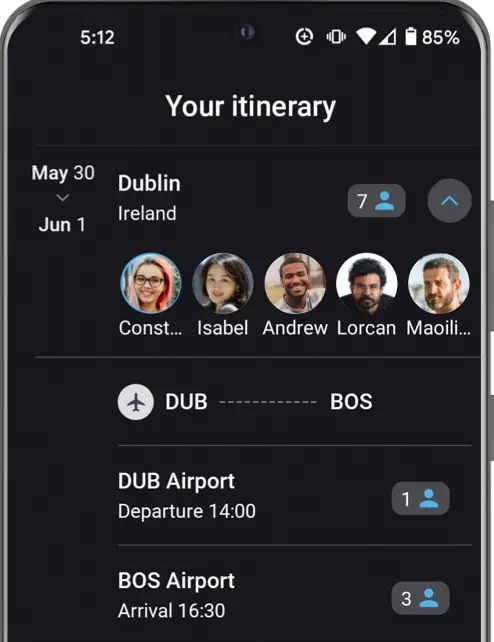
apreet turns two things you already keep, your calendar and your contacts, into a single answer: who can I meet in person on this trip? Here is the mechanism, in plain steps, and the privacy choices built into each one.
Quick answer. apreet matches your calendar against your contacts, so you know who to meet before you travel. It reads the titles, times and locations of your events, then places your contacts next to each destination. It never reads your notes and never shows you to strangers.
The two signals: your calendar and your contacts
apreet needs only two inputs. Your calendar says where you will be and when. Your address book says who you already know and roughly where they are based. Everything apreet does is the overlap of those two lists. There is no feed to scroll, no strangers to swipe, and no public map of your location.
Step 1: Build your itinerary
apreet reads the title, times and location of the events in your calendar and builds a rolling four-week itinerary. An event's notes, description, attendees and attachments never leave your phone. Flights, conferences, and customer visits become a simple list of cities and dates.
Step 2: Place your contacts on the map
apreet places the contacts in your address book next to your destinations, using the city in their address record. So when your itinerary says Chicago next Tuesday, apreet already knows which of the people you know are based there. These are private destination suggestions from your own address book, visible only to you, whether or not the contact uses apreet.
What steps 1 and 2 give you: your trip, with the people you know at each stop.
Step 3: Overlay the two itineraries
A mutual itinerary match needs you both on apreet, trips that overlap in time and place, and each other's numbers on both phones. Then you each see when your paths cross: the same city, the same days, sometimes the same airport. The match is mutual, so neither of you is tracked by someone you have not met.
Step 4: Reach out before you arrive
apreet turns the overlap into a short list: here are the people you know near where you are going. You can message one person or, on iPhone, a small group, before the trip starts. By the time you land, the calendar holds meetings worth having instead of room service.
apreet was built around a single idea: connect you to people you already know, and no one else. That choice shapes what the app reads, what it ignores, and what it will never do.
What apreet reads
The titles, times and locations of your calendar events; your contacts' names, numbers, emails, addresses, job titles and companies; and your location while the app is open, if you allow it. That is enough to know where you will be and who you know nearby.
What apreet ignores, on purpose
The notes and body of your calendar events. apreet does not read them, does not store them, and does not need them.
What apreet never does
No live location broadcast. No public map. No strangers. apreet only ever connects two people who are already in each other's address books.
Mutual by default
A mutual itinerary match needs you both on apreet, trips that overlap in time and place, and each other's numbers on both phones. You are never visible to someone you have not met, and you can leave at any time.
Cookieless analytics
This website uses privacy-friendly, cookieless analytics. No advertising trackers, no consent banner to dismiss.
Read the full policy
The legal detail lives in the privacy policy. This page is the plain-English version of the same promises.